
According to a recent report from ATTOM, a property data provider, foreclosure filings have seen a 2% increase compared to the previous quarter and an 8% rise from the same time last year. While media attention is focused on this upswing, reporting solely on these numbers might lead to unwarranted worries, including fears of a potential price crash. However, it’s essential to recognize that even though there is an increase, the data does not point to a foreclosure crisis on the horizon.
To gain a comprehensive perspective, let’s examine the latest information within the context of previous years. By doing so, we can better understand the current state of the market and make informed decisions about our housing endeavors.
A Gradual Rise in Foreclosures: Context Matters
Contrary to sensational headlines, the recent increase in foreclosures should be viewed in context, which paints a different picture altogether. In the past few years, the number of foreclosures reached record lows primarily due to supportive measures like the forbearance program and other relief options, enabling millions of homeowners to retain their homes during the challenging 2020 and 2021 period. Moreover, with home values appreciating during this time, many homeowners were able to capitalize on their home equity and opt to sell their houses instead of facing foreclosure, had they encountered other circumstances.
As the government’s foreclosure moratorium came to an end, an expected uptick in foreclosures occurred. However, this does not indicate any immediate distress in the housing market. As highlighted by Clare Trapasso, Executive News Editor at Realtor.com, many of these foreclosures were likely to have occurred during the pandemic but were delayed due to federal, state, and local moratoriums aimed at protecting homeowners. Therefore, it’s crucial to recognize that this increase is not a sign of widespread financial hardship among homeowners, but rather a consequence of lenders catching up on delayed proceedings.
Bankrate also corroborates this perspective, explaining that unlike the years following the housing crash, the current situation is significantly different. Most homeowners today possess a comfortable equity cushion in their properties, and lenders refrained from filing default notices during the pandemic, contributing to record-low foreclosures in 2020. While there has been a slight uptick in foreclosures since then, it pales in comparison to the scale witnessed during the housing crash.
To emphasize this disparity, consider the graph below, illustrating data on foreclosure filings during the first half of each year since 2008. The graph unmistakably displays that foreclosure activity has consistently remained lower since the housing crash. In essence, the current rise in foreclosures is a gradual and manageable trend, reflecting a mix of delayed activity and economic conditions, rather than a sudden flood of distressing events.
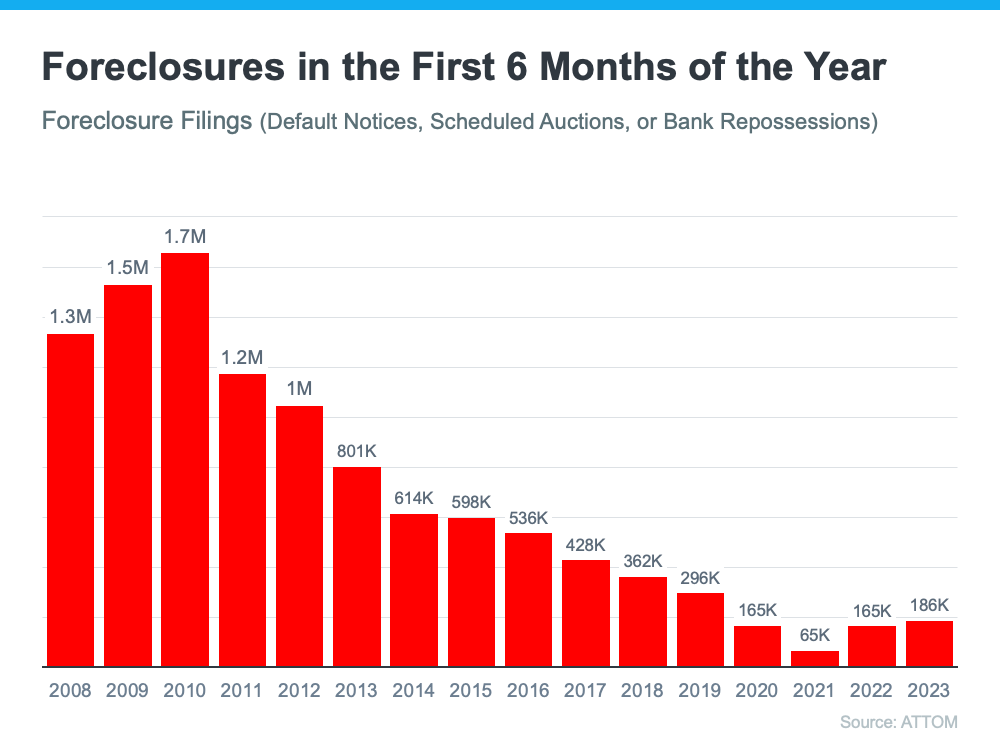
While foreclosures are on the rise, it’s evident that the current level of foreclosure activity bears no resemblance to the staggering numbers witnessed during the housing market crash. Present-day foreclosures remain substantially below the record-high figures reported back then.
Several factors contribute to this stark contrast, as mentioned earlier. One significant aspect is that today’s homebuyers are generally more qualified and less likely to default on their loans. Lending practices have evolved, with more stringent criteria for mortgage approvals and increased emphasis on borrower creditworthiness. This shift has resulted in a more stable pool of homeowners who are better equipped to manage their mortgage obligations, reducing the likelihood of foreclosure events.
Furthermore, the initiatives and support programs implemented during the pandemic, such as forbearance options, played a crucial role in preventing a widespread foreclosure crisis. These measures provided much-needed relief to homeowners facing financial hardships, enabling them to stay in their homes and avoid defaulting on their loans.
When comparing the current foreclosure landscape to the distressing times of the housing market crash, the marked improvements in the quality of buyers and the comprehensive support provided demonstrate the resilience and strength of today’s housing market. Although foreclosures have seen an increase, they remain well below historical highs, thanks to a more robust and qualified group of homeowners.
Bottom Line
In essence, contextualizing the data is of utmost importance at present. While the housing market is witnessing a projected increase in foreclosures, it’s essential to recognize that the current situation is vastly different from the crisis levels observed during the housing bubble burst. The market has evolved, and various safeguards are now in place, making a home price crash unlikely. By understanding this perspective, we can approach the current market with a sense of reassurance and make well-informed decisions about real estate matters.