
Robbinsville, new jersey
Home » Our Latest Blog » Real Estate in Robbinsville, NJ » Why You Don’t Need To Fear the Return of Adjustable-Rate Mortgages
Why You Don’t Need To Fear the Return of Adjustable-Rate Mortgages

If you have memories of the housing crash in 2008, you might also remember the prevalence of adjustable-rate mortgages (ARMs) during that time. Interestingly, after years of being relatively rare, ARMs are regaining popularity among homebuyers. Let’s delve into the reasons behind this resurgence and why it shouldn’t be a source of worry.
The Rise in Popularity of ARMs in Recent Times This chart, utilizing data from the Mortgage Bankers Association (MBA), illustrates the upward trend in the percentage of adjustable-rate mortgages during the past several years:
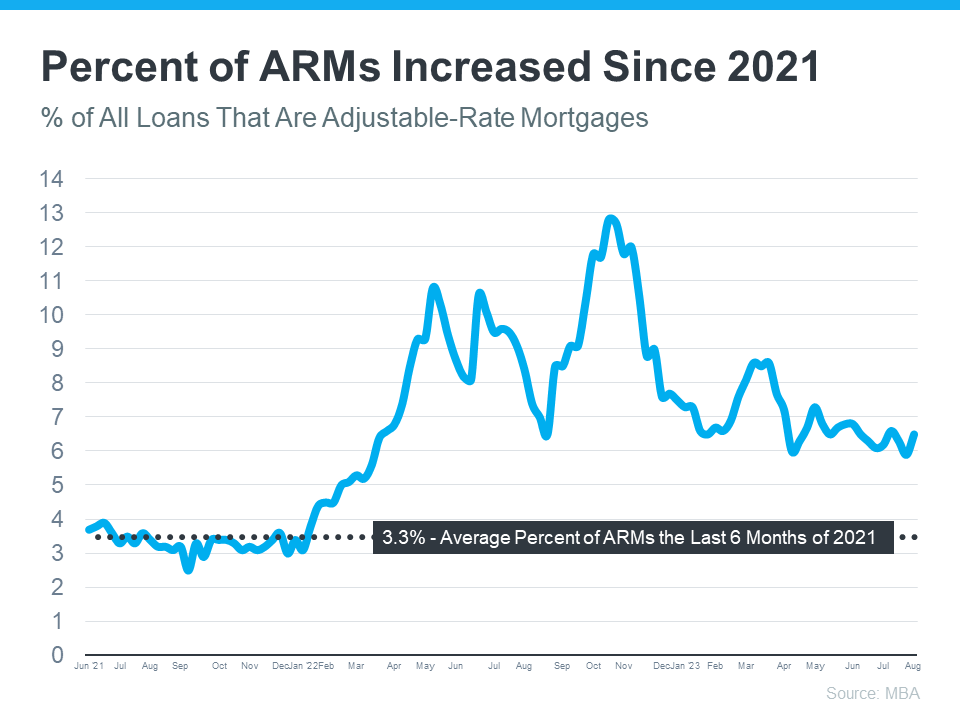
As depicted by the graph, the percentage of adjustable-rate mortgages remained at approximately 3% of all mortgages in 2021. However, last year witnessed a notable surge in the adoption of adjustable-rate mortgages. The rationale behind this increase is straightforward. The sharp escalation in mortgage rates during that period prompted numerous homeowners to reconsider their options. Faced with elevated traditional borrowing expenses, some individuals opted for adjustable-rate mortgages due to the prospect of securing a more favorable interest rate.
Distinguishing Today's ARMs from Those in 2008
To gain a clearer perspective, it’s crucial to recognize that today’s adjustable-rate mortgages (ARMs) are notably distinct from the ones that gained traction leading up to 2008. A significant factor contributing to the housing crash was the lax lending standards prevalent at that time. During that era, individuals obtaining ARMs were not subjected to rigorous scrutiny regarding their employment, assets, income, and related factors. Essentially, loans were granted without the requisite qualifications, resulting in many homeowners facing challenges in repaying loans they were never truly qualified for.
In the present scenario, lending standards have undergone substantial changes. Banks and lenders have learned from the past crisis, and now they meticulously verify income, assets, employment history, and other vital factors. Consequently, contemporary buyers must meet stringent qualifications and demonstrate their capacity to repay loans.
Archana Pradhan, an Economist at CoreLogic, underscores the difference between then and now:
“Approximately 60% of Adjustable-Rate Mortgages (ARMs) originated in 2007 lacked thorough documentation… Similarly, in 2005, 29% of ARM borrowers had credit scores below 640… In contrast, the current landscape mandates comprehensive documentation for almost all conventional loans, including both ARMs and Fixed-Rate Mortgages. These loans are amortized and extended to borrowers with credit scores exceeding 640.”
To make this point even clearer, Laurie Goodman from the Urban Institute simplifies it:
“Current Adjustable-Rate Mortgages carry no more risk than other mortgage options, and their reduced monthly payments could potentially broaden homeownership opportunities for a larger pool of prospective buyers.”
Bottom Line
In conclusion, if concerns about today’s adjustable-rate mortgages resembling those from the housing crash are on your mind, be reassured that the circumstances are distinct this time around.
Furthermore, if you’re a first-time homebuyer seeking insights into lending choices that can assist you in tackling the current affordability hurdles, don’t hesitate to connect with a reliable lender.
For more personal Property results contact us today
Find Your Perfect RObbinsville Home

2023 Chairman's Circle Diamond
2023 Platinum Circle of Excellence
