
Princeton Rent vs. Buy in 2026: The Real Cost of Renting vs. Owning Near Campus
Facebook
X
Email
Print
Published Saturday, September 05, 2026
If you’re moving to Princeton for a faculty position, a new professional opportunity, graduate school, or another chapter of your career, one question quickly becomes important: Should you rent or buy?
The answer isn’t as simple as comparing a monthly rent payment with a mortgage payment.
The Princeton rent vs buy decision in 2026 also involves home prices, mortgage rates, property taxes, maintenance, expected length of stay, commute, access to Princeton University, and whether you want to build equity.
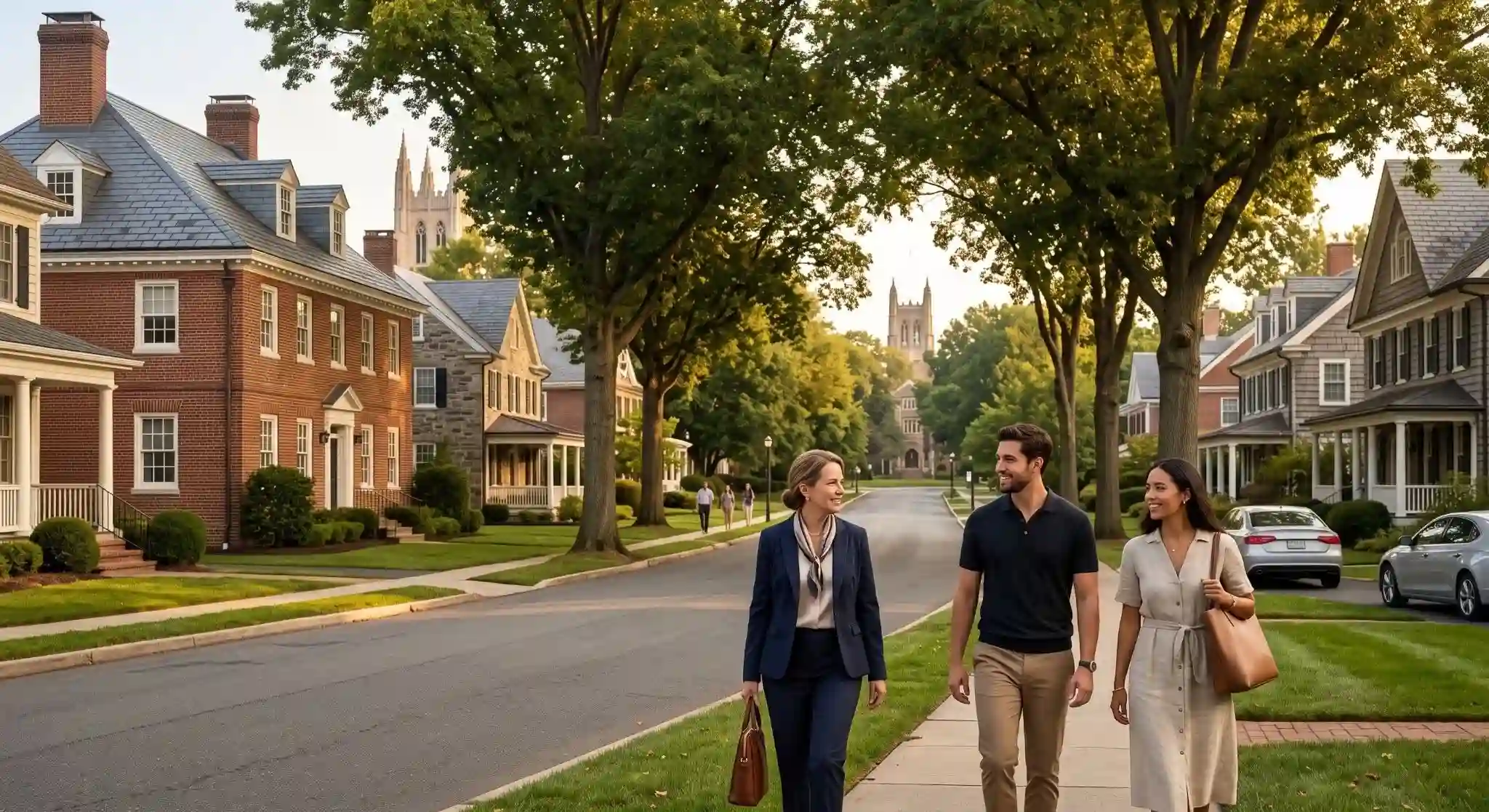
Princeton remains one of Mercer County’s most distinctive housing markets. At the same time, the broader Mercer County market can offer substantially different price points outside Princeton proper. Current data shows why looking beyond a simple “rent versus mortgage” calculation is essential.
Here’s how to evaluate the decision before signing a lease or making an offer.
Princeton Rent vs. Buy: What's Different in 2026?
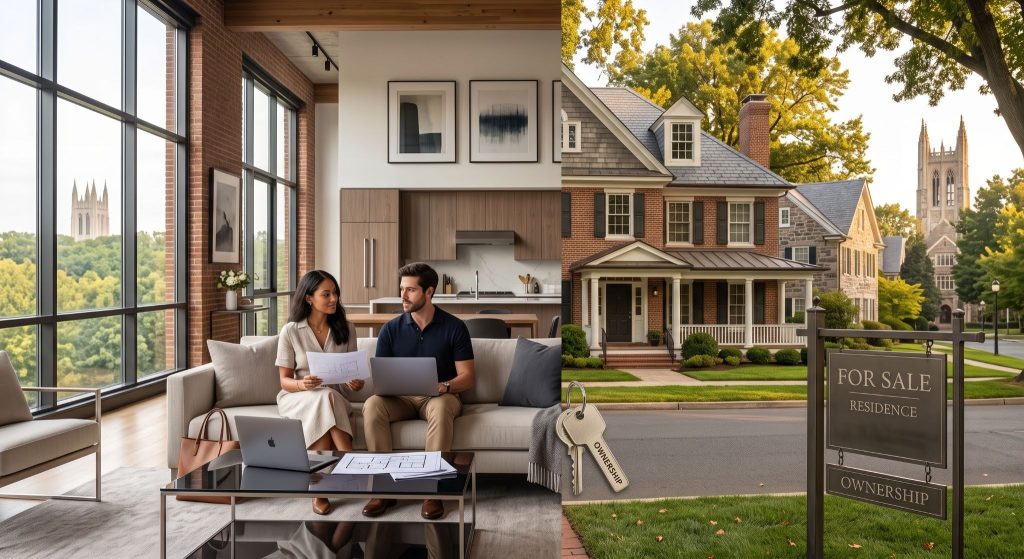
The Princeton market doesn’t behave exactly like the broader Mercer County market.
For the three months ending May 2026, Princeton’s median sale price was approximately $1.2 million, according to Redfin, while Mercer County’s median sale price was approximately $479,000. Princeton’s median was down year over year during that period, while Mercer County’s median was up 5.2%.
That difference is important.
A buyer focused specifically on Princeton may face a significantly higher entry price than someone willing to consider nearby communities.
Meanwhile, Zillow reported an average Princeton rent of approximately $3,461 per month in June 2026, up 2.5% year over year.
The takeaway: Princeton can make renting attractive for people who need flexibility, while buying can become more compelling for buyers who plan to remain in the area long enough to build equity.
Princeton Rent vs. Buy: What's Different in 2026?
The Princeton market doesn’t behave exactly like the broader Mercer County market.
For the three months ending May 2026, Princeton’s median sale price was approximately $1.2 million, according to Redfin, while Mercer County’s median sale price was approximately $479,000. Princeton’s median was down year over year during that period, while Mercer County’s median was up 5.2%.
That difference is important.
A buyer focused specifically on Princeton may face a significantly higher entry price than someone willing to consider nearby communities.
Meanwhile, Zillow reported an average Princeton rent of approximately $3,461 per month in June 2026, up 2.5% year over year.
The takeaway: Princeton can make renting attractive for people who need flexibility, while buying can become more compelling for buyers who plan to remain in the area long enough to build equity.
What Does It Cost to Rent in Princeton?
For many relocating professionals and graduate students, renting is the easiest way to establish a foothold in Princeton.
A rental can offer:
- Lower upfront costs than purchasing
- Greater flexibility if your job or academic program changes
- Less responsibility for major repairs
- Easier access to downtown Princeton or campus
- The ability to learn the area before purchasing
Apartments Near Campus Can Be Especially Convenient
Princeton University itself provides substantial housing options for students.
The University reports that approximately 70% of regularly enrolled graduate students live in University housing, with options including the Graduate College, Lakeside Apartments, Lawrence Apartments, and Meadows Apartments.
The newer Meadows Apartments, for example, includes 379 housing units with studios and one- through four-bedroom options.
For graduate students, faculty, or professionals who qualify for University housing, these options can dramatically change the rent-versus-buy calculation.
However, University housing availability and eligibility are different from purchasing a home in Princeton’s private market.
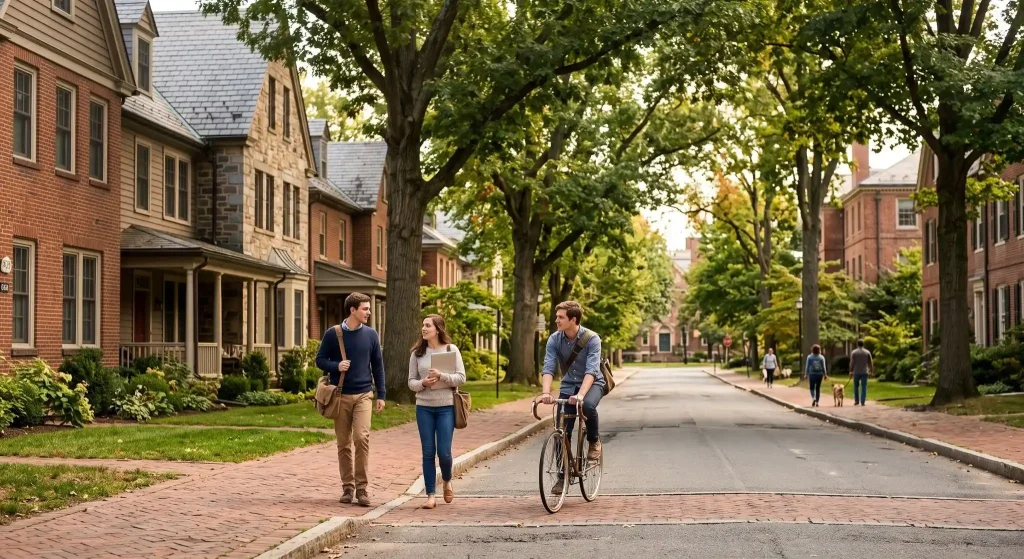
What Does It Cost to Buy in Princeton?
Buying gives you something renting doesn’t: ownership and potential equity growth.
But the monthly mortgage payment is only one part of the cost.
A Princeton buyer should budget for:
Mortgage rates also remain an important factor.
As of August 13, 2026, Freddie Mac’s national average 30-year fixed mortgage rate was 6.67%.
That means buyers should be careful about assuming that a lower interest rate will automatically make buying affordable.
At the same time, today’s mortgage rate doesn’t necessarily have to be the rate you keep forever. Buyers who qualify may eventually refinance if market conditions become more favorable.
- Principal and interest
- Property taxes
- Homeowners insurance
- Maintenance and repairs
- Utilities
- Closing costs
- Potential HOA fees
- Future selling costs

Don’t Forget Princeton Property Taxes
Property taxes deserve special attention when evaluating Princeton real estate.
Princeton’s 2025 total tax rate was reported at 2.733, with an effective tax rate of 1.814. The municipality’s 2026 tax documents are now available through its Tax Collector’s Office.
The important point for buyers is simple: never evaluate a Princeton property based on the listing price alone.
Two homes with similar purchase prices can have very different total ownership costs depending on taxes, insurance, maintenance requirements, and financing.
A Simple Rent vs. Buy Example
Imagine you’re comparing:
Option A: Rent
- Rent: approximately $3,500/month
- Annual rent: approximately $42,000
- Minimal maintenance responsibility
- Greater flexibility
Option B: Buy
- Your ownership costs could include:
- Mortgage principal and interest
- Property taxes
- Insurance
- Maintenance
- Utilities
- Closing costs
The buyer may spend more each month initially.
But part of the mortgage payment goes toward principal, meaning you’re building ownership in the property rather than simply paying for housing.
This is why comparing rent to mortgage payment alone is misleading.
A better calculation asks:
What will my total cost of ownership be compared with my total cost of renting over the number of years I expect to stay?
When Renting in Princeton Makes More Sense
Renting may be the better choice if:
You’re a graduate student
If you’re completing a program with a defined timeline, buying may create unnecessary transaction costs and responsibilities.
You’re new to the area
Renting for a year can help you understand Princeton’s neighborhoods, commuting patterns, parking, shopping, and lifestyle before committing to a purchase.
Your career situation is uncertain
Faculty appointments, research positions, internships, and corporate assignments can change. Flexibility has real financial value.
You want to live close to campus
If your priority is walking or biking to Princeton University, renting may provide access to locations where purchasing would require a substantially larger budget.
When Buying May Make More Sense
Buying becomes more attractive when you expect to stay in Princeton for several years.
Consider purchasing if:
- You have stable income
- You have sufficient cash reserves
- You can comfortably handle the total monthly ownership cost
- You expect to stay for multiple years
- You want to build equity
- You value having control over your property
- You may eventually use the property as an investment or future residence
Where Should You Live If You're Considering Buying?
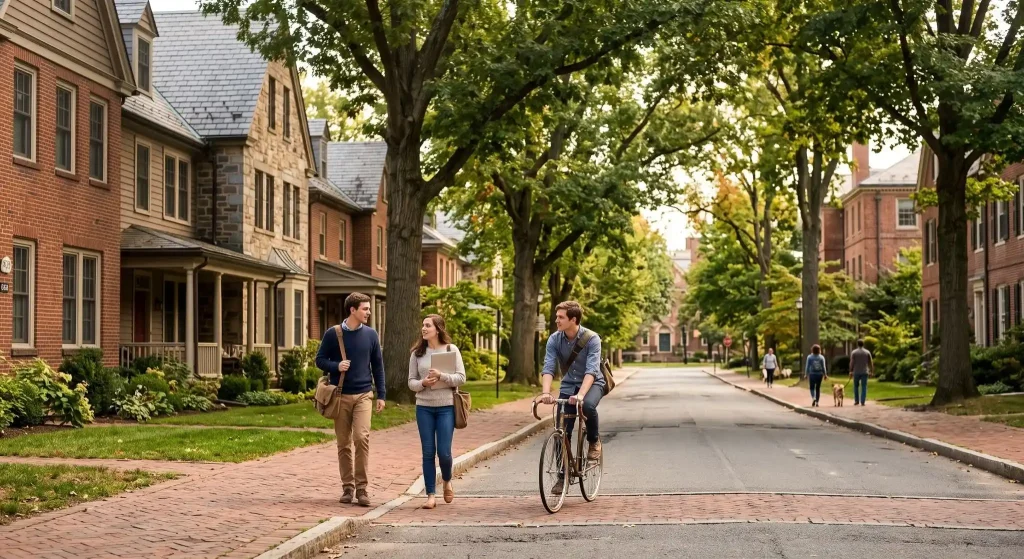
One of the biggest advantages of working with a local Princeton real estate professional is understanding that “Princeton” doesn’t have to mean one type of property or lifestyle.
Downtown Princeton
Downtown offers immediate access to Nassau Street, Palmer Square, restaurants, shopping, culture, and the University area. Princeton University describes Palmer Square and Nassau Street as central parts of the town’s commercial and cultural environment.
This can be attractive for professionals who prioritize walkability.
Near Princeton University
For faculty, researchers, and graduate students, proximity to campus can significantly reduce commuting time.
But properties close to campus can command a premium, so buyers need to determine whether convenience justifies the additional cost.
Princeton's Residential Neighborhoods
If you prioritize more space, privacy, parking, or a traditional residential setting, exploring Princeton’s neighborhoods beyond the immediate downtown core may provide a better fit.
Nearby Mercer County Communities
Don’t overlook nearby communities simply because your workplace or university is in Princeton.
Mercer County’s median sale price was about $479,000 over the three months ending May 2026, compared with approximately $1.2 million in Princeton.
Depending on your commute tolerance, expanding your search could create significantly more purchasing power.
What About Schools and Future Resale Value?
For faculty and professionals with children, schools can become a major part of the buying decision.
Princeton Public Schools serves elementary, middle, and high school students and operates neighborhood elementary schools including Community Park, Johnson Park, Littlebrook, and Riverside, followed by Princeton Middle School and Princeton High School.
Even if you don’t have children today, school quality can matter when thinking about future resale appeal.
A local agent can help you understand not only school boundaries but also how neighborhood, property type, taxes, commute, and resale considerations interact.
The Biggest Rent vs. Buy Mistakes to Avoid
1. Comparing rent to mortgage only
Taxes, insurance, maintenance, and closing costs matter.
2. Assuming buying is always better
Homeownership isn’t automatically the financially superior choice for someone staying for only one or two years.
3. Ignoring opportunity cost
Money used for a down payment cannot simultaneously be invested elsewhere.
4. Buying at the top of your budget
A home should fit comfortably within your overall financial picture—not merely qualify for a lender’s maximum.
5. Choosing solely based on proximity to campus
A slightly longer commute could potentially unlock substantially more housing options.
What Could Princeton's Housing Market Look Like Next?
The 2026 market is already showing an interesting split.
Princeton’s median sale price has softened year over year, while Mercer County overall has continued to post price growth.
That doesn’t mean Princeton homes are suddenly “cheap.”
Instead, it suggests buyers should pay close attention to property-specific value rather than relying on broad market headlines.
Mortgage rates will also remain a major variable. With the 30-year average at 6.67% in mid-August 2026, even relatively small rate changes can materially affect purchasing power.
For buyers, this creates an important opportunity: instead of trying to perfectly predict the market, focus on finding a property whose price, condition, location, taxes, and financing work for your circumstances.
So, Should You Rent or Buy in Princeton in 2026?
There’s no universal winner.
Rent if flexibility, short-term housing, or campus convenience is your priority.
Buy if you have stable finances, expect to stay several years, and want to build equity and establish a long-term home base.
For university faculty and relocating professionals, the answer may also depend on whether you expect your Princeton connection to last five years—or decades.
For graduate students, renting or University housing may be the obvious starting point. For established professionals and faculty members, purchasing could make more sense when the numbers and expected timeline align.
The smartest approach is to calculate your specific scenario, rather than relying on a generic rent-versus-buy calculator.
Ready to Compare Your Princeton Options?
Ready to run the personalized numbers for your move? Contact the Unify Real Estate Team today for a complimentary market consultation. Let’s find your perfect home base in Princeton!
Whether you’re searching for an apartment near campus, evaluating your first Princeton home, relocating for work, or considering a long-term Mercer County investment, the right decision starts with understanding the local market and your own numbers.
FAQs
Is it cheaper to rent or buy in Princeton in 2026?
It depends on the property, financing, taxes, down payment, and how long you plan to stay. Princeton’s average rent was approximately $3,461 in June 2026, while the median home sale price was approximately $1.2 million in recent Redfin data.
What is the average rent in Princeton, NJ in 2026?
Zillow reported an average Princeton rent of approximately $3,461 per month in June 2026, with rents up 2.5% year over year. Individual apartments can vary considerably by location, size, amenities, and availability.
What is the median home price in Princeton NJ in 2026?
Redfin reported a median Princeton sale price of approximately $1.2 million for the three months ending May 2026. The figure represents recent closed sales and can vary considerably by property type and neighborhood.
Is buying a home in Princeton worth it?
Buying can make sense for households with stable finances that expect to remain in the area for several years. The decision should consider mortgage costs, taxes, maintenance, closing costs, and potential equity—not simply the monthly payment.
Should graduate students rent or buy in Princeton?
For many graduate students, renting or University housing can provide greater flexibility. Princeton University reports that approximately 70% of regularly enrolled graduate students live in University housing, including apartments and dormitory options.
Are there apartments near Princeton University?
Yes. Princeton University provides several graduate housing options, including Lakeside Apartments, Lawrence Apartments, Meadows Apartments, and the Graduate College. Private apartments are also available throughout Princeton and surrounding communities.
Is Princeton more expensive than the rest of Mercer County?
Generally, Princeton has a substantially higher home-price profile than Mercer County overall. Recent Redfin data put Princeton’s median sale price around $1.2 million versus approximately $479,000 for Mercer County.