Trump’s 50-Year Mortgage Plan: Could This Really Make Homeownership Easier?
Facebook
X
Email
Print
Published Wednesday, November 17, 2025
The idea of a 50-year mortgage might sound like a dream come true or a risky gamble. Recently, former President Trump’s proposal for a 50-year mortgage has sparked debates among homeowners, potential buyers, and real estate experts alike. But what does this plan really mean for everyday Americans? Let’s break it down and explore the potential benefits, risks, and impacts on the housing market.
What Exactly Is a 50-Year Mortgage?
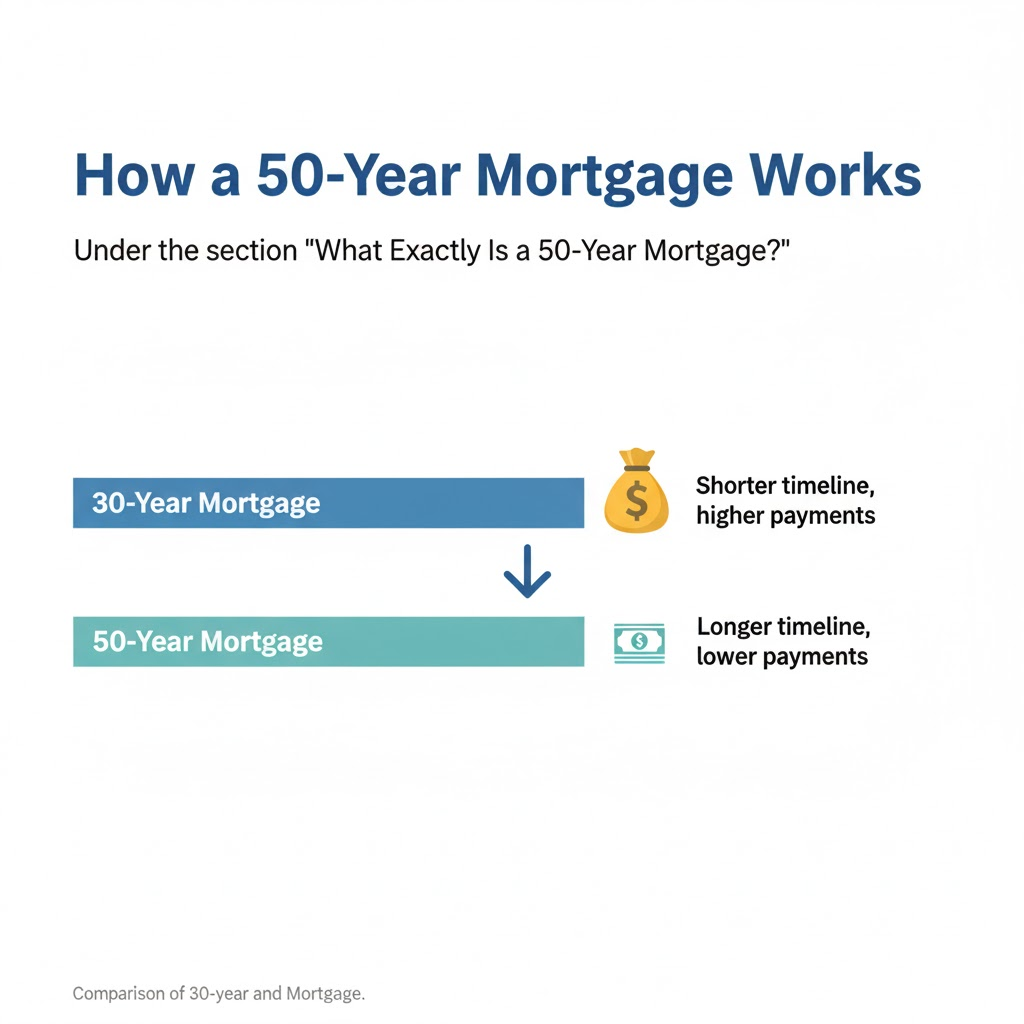
In simple terms, a 50-year mortgage extends the traditional 30-year mortgage term, letting borrowers spread payments over a longer period. The obvious benefit? Lower monthly payments that can make budgeting easier. The trade-off? You’ll pay more in interest over the life of the loan, and your home equity will build more slowly.
Trump’s 50-Year Mortgage Proposal
Trump’s plan aims to make homeownership more accessible by offering a longer-term mortgage option. The goal is simple: lower monthly payments for buyers and open doors for those who struggle to qualify for conventional mortgages.
If implemented, this plan could potentially address the growing affordability challenge in the U.S. housing market, helping more Americans take the first step toward owning a home.
Potential Benefits of a 50-Year Mortgage
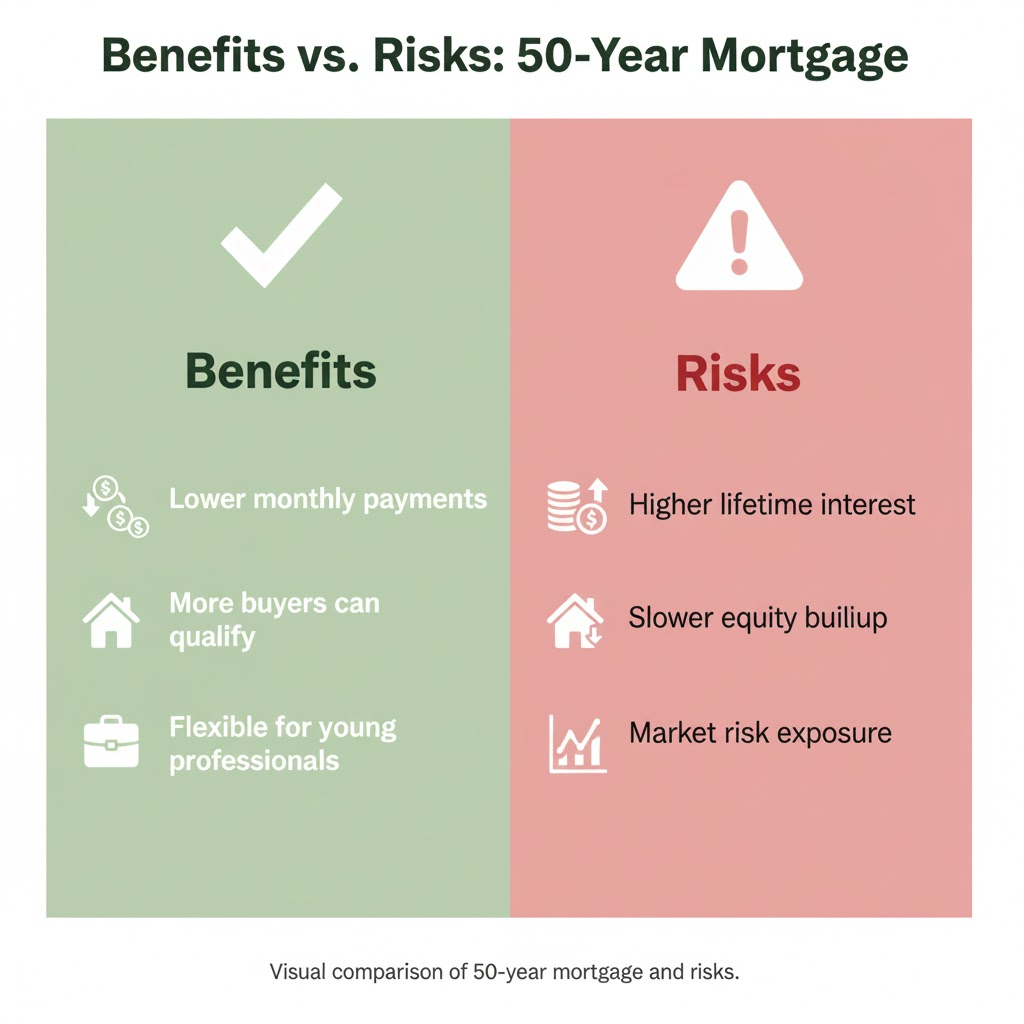
- Lower Monthly Payments Spreading payments over 50 years reduces monthly obligations, giving homeowners breathing room for other expenses.
- Increased Homeownership Opportunities With more manageable payments, people who previously struggled to qualify could now enter the housing market, potentially raising overall homeownership rates.
- Flexibility for Buyers A 50-year mortgage lets buyers prioritize lower monthly costs over rapid repayment—a helpful option for young professionals, first-time buyers, or those early in their careers.
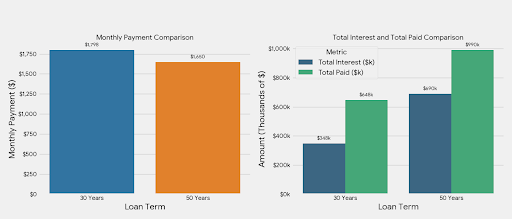
- 30-year loan → ~$1,798/month
- 50-year loan → ~$1,650/month Notice the smaller difference in payment, but the long-term interest is higher.
Risks to Consider
- Higher Interest Costs Even though monthly payments are lower, total interest paid over 50 years can be significantly higher than a 30-year mortgage.
- Slower Equity Buildup With slower equity growth, homeowners may face challenges if they need to refinance or sell their property quickly.
- Market Vulnerability Property value fluctuations could leave homeowners underwater, owing more than their home is worth.
Impact on the Real Estate Market
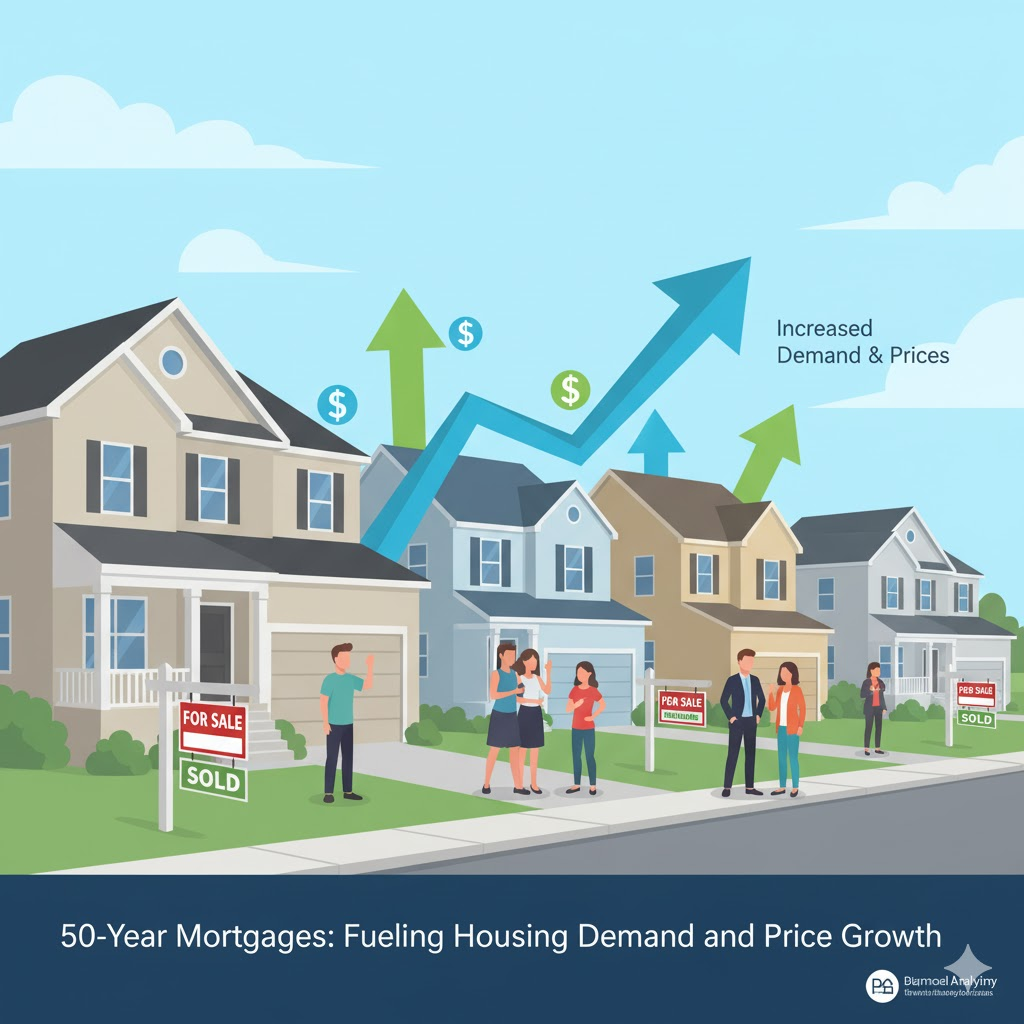
- Increased Demand: More buyers could enter the market, potentially driving home prices higher.
- Changes in Lending: Banks and lenders may develop new products or adjust rates to accommodate longer-term mortgages.
- Economic Ripple Effect: Higher homeownership rates may stimulate local economies, boosting spending on home-related goods and services.
Bottom Line
- Trump’s 50-year mortgage plan presents a mix of opportunities and challenges. Lower monthly payments and broader access could help more Americans achieve homeownership—but at the cost of higher interest and slower equity growth.
For anyone considering a 50-year mortgage, it’s essential to:
- Run the numbers carefully
- Consult a financial advisor
- Understand how it fits into long-term financial goals