Diwali (Deepavili)

What is Diwali and Why is it Important in Indian Culture?
Diwali, also known as Deepavali, is one of the most celebrated festivals in India and among Indian communities worldwide. This vibrant festival, often referred to as the “Festival of Lights,” symbolizes the victory of light over darkness, good over evil, and knowledge over ignorance.
Diwali’s origins are rooted in various legends and traditions, which differ across regions and religions. The most popular story is from the Hindu epic, the Ramayana, narrates the return of Lord Rama to his kingdom Ayodhya after 14 years of exile and his victory over the demon king Ravana. The people of Ayodhya lit oil lamps to celebrate his return, which is why lighting lamps (diyas) is a central part of Diwali celebrations.
How Diwali is Celebrated
Diwali is typically celebrated over five days, taking place between October and November, with the exact date changing every year. Each day holds its own significance:
- Dhanteras: The first day marks the beginning of the festival, where people clean their homes and buy gold or new utensils, symbolizing good luck and prosperity.
- Naraka Chaturdashi (Choti Diwali): On the second day, people decorate their homes with rangoli (colorful patterns made on the floor) and light diyas. Some also practice ritual baths at dawn.
- Lakshmi Puja: The third day is the main day of Diwali, dedicated to the worship of Goddess Lakshmi, the goddess of wealth and prosperity. Families gather for prayers, light fireworks, and enjoy festive meals.
- Govardhan Puja: The fourth day is celebrated differently in various regions. In many parts of North India, this day commemorates the legend of Lord Krishna lifting the Govardhan Hill to protect the villagers from torrential rains sent by Indra, the god of rain and thunder. People create small mounds of cow dung, symbolizing the Govardhan Hill, and decorate them with flowers. They offer prayers and food to Lord Krishna in gratitude for his protection.
- Bhai Dooj: The fifth and final day celebrates the bond between brothers and sisters, similar to Raksha Bandhan. A noteworthy example of this is the sister placing a tilak on the brothers forehead.
Cultural Importance of Diwali
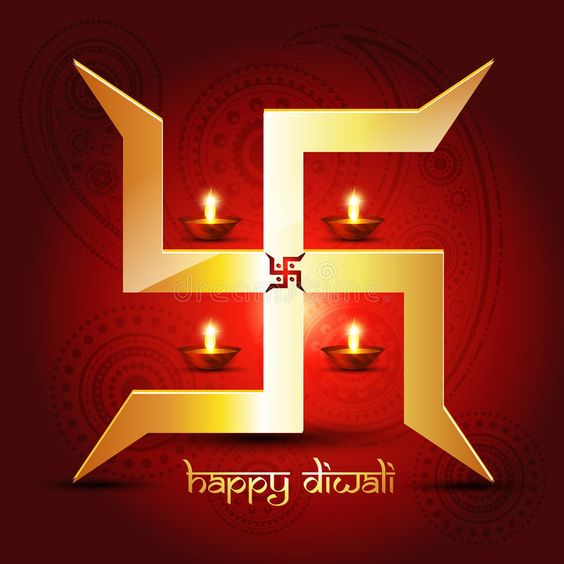
Diwali is more than just a festival; it is a time for family reunions, community bonding, and cultural expression. It brings people together, regardless of their backgrounds, to celebrate with joy and harmony. The festival also has significant economic implications, as it is a peak shopping season in India, boosting local businesses and artisans. The Swastik symbol you see here holds deep cultural and religious significance in India and other parts of Asia. The Swastik is an ancient symbol that dates back thousands of years, with its roots in the Vedas, the oldest scriptures of Hinduism. The word “Swastik” comes from the Sanskrit words “su” (meaning “good” or “well”) and “asti” (meaning “it is”), translating to “it is good” or “well-being”. Unfortunately, the symbol was appropriated and misused by the Nazi regime during World War II, leading to its association with hate and genocide in the Western world. This has caused significant misunderstanding and controversy regarding its original meaning. Moreover, Diwali promotes values such as charity, as many people engage in acts of kindness and donate to those in need during this time. The festival’s emphasis on light and positivity serves as a reminder of the importance of hope and resilience in our lives.Conclusion
Diwali is a beautiful tapestry of traditions, stories, and values that highlight the rich cultural heritage of India. Whether through the flickering lights of diyas, the vibrant colors of rangoli, or the joyous gatherings of families and friends, Diwali continues to illuminate hearts and homes around the world. Team Sharif Sells wishes you happy celebrations during this time!